

Blood on the tissue. A sharp sting after passing stool. Discomfort that makes sitting uncomfortable. Most people jump straight to one word: piles. But pain and bleeding in this area can come from two quite different conditions, piles and a fissure, and treating one like the other rarely brings lasting relief.
The good news is that both conditions leave clear clues once you know what to look for, and both usually respond well to the right combination of digestion first care and doctor guided Ayurvedic treatment. This guide walks you through the real differences, what causes each, and what actually helps them heal.
Piles and Fissure at a Glance: The Key Differences
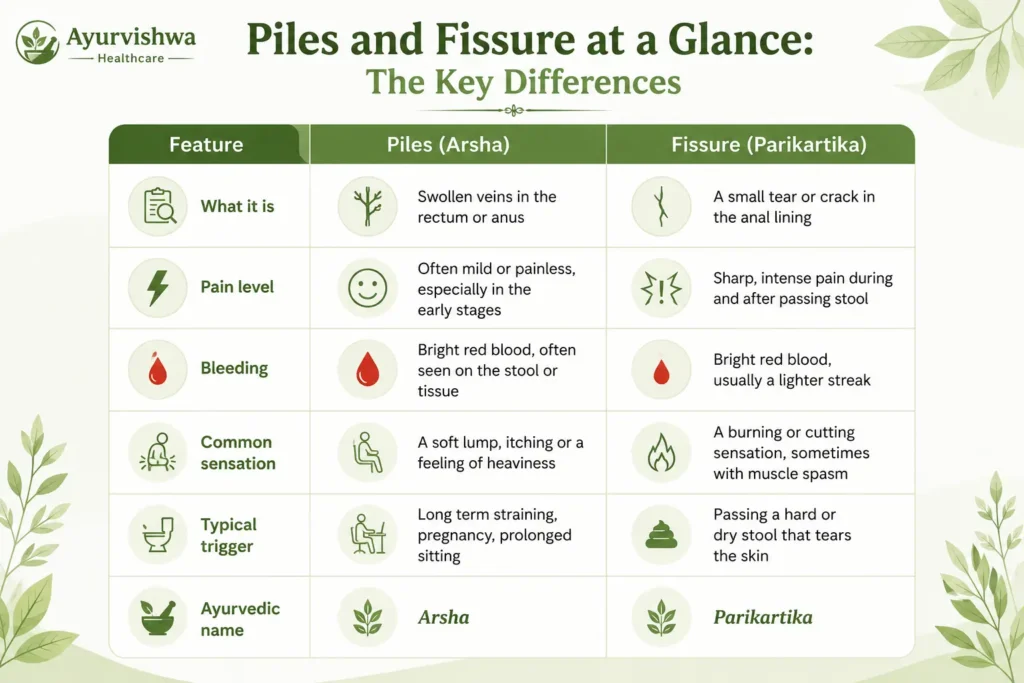
| Feature | Piles (Arsha) | Fissure (Parikartika) |
|---|---|---|
| What it is | Swollen veins in the rectum or anus | A small tear or crack in the anal lining |
| Pain level | Often mild or painless, especially in the early stages | Sharp, intense pain during and after passing stool |
| Bleeding | Bright red blood, often seen on the stool or tissue | Bright red blood, usually a lighter streak |
| Common sensation | A soft lump, itching or a feeling of heaviness | A burning or cutting sensation, sometimes with muscle spasm |
| Typical trigger | Long term straining, pregnancy, prolonged sitting | Passing a hard or dry stool that tears the skin |
| Ayurvedic name | Arsha | Parikartika |
Both conditions can also occur together, which is one more reason a proper examination matters more than guessing based on symptoms alone.
What Are Piles? Understanding Arsha in Ayurveda
Piles, also called hemorrhoids, are swollen veins in and around the rectum and anus, similar in nature to varicose veins elsewhere in the body. They can be internal, sitting inside the rectum, or external, forming just under the skin around the anus.
In the early stages, piles are often painless, which is exactly why they tend to be ignored. Bleeding, usually bright red and seen on the stool or tissue, along with itching, a feeling of heaviness or a soft lump near the anus, are the most common early signs. Pain tends to appear later, if the piles become large, prolapsed or thrombosed.
In Ayurveda, piles are known as Arsha, understood as a disturbance of Vata, Pitta and Kapha together, rooted in weak Agni, or digestive fire, and the buildup of Ama, or undigested toxins, largely driven by chronic constipation.
What Is an Anal Fissure? Understanding Parikartika
An anal fissure is a small tear or crack in the delicate lining of the anal canal, most often caused by passing a hard or dry stool. Unlike piles, a fissure usually announces itself immediately and unmistakably, with a sharp, burning or cutting pain during and right after passing stool, sometimes lasting for several minutes afterward.
Bleeding with a fissure tends to be a lighter streak on the stool or tissue, rather than the heavier bleeding sometimes seen with piles. Many people also notice a spasm in the surrounding muscle, which can make the next bowel movement even more painful, creating a cycle where fear of pain leads to more straining or stool holding, which then makes the fissure worse.
Ayurveda refers to this condition as Parikartika, mainly linked to aggravated Vata and Pitta dosha, which brings dryness, cracking and a burning quality to the affected tissue.
Please note: Most rectal bleeding is due to piles or a fissure and settles well with proper care. However, see a doctor promptly if bleeding continues beyond a week, if you are over 40, or if it comes with unexplained weight loss or a change in bowel habits lasting more than a few weeks. These need a proper examination to rule out other causes rather than being assumed to be piles.
Not Sure Which of the Two You Are Dealing With?
At Ayurvishwa Healthcare, our doctors examine your symptoms carefully and assess your digestion and Prakriti through Nadi Pariksha before recommending the right care plan.
Book your consultation today and get a clear diagnosis instead of guesswork.
Why Piles and Fissures Share the Same Root Cause
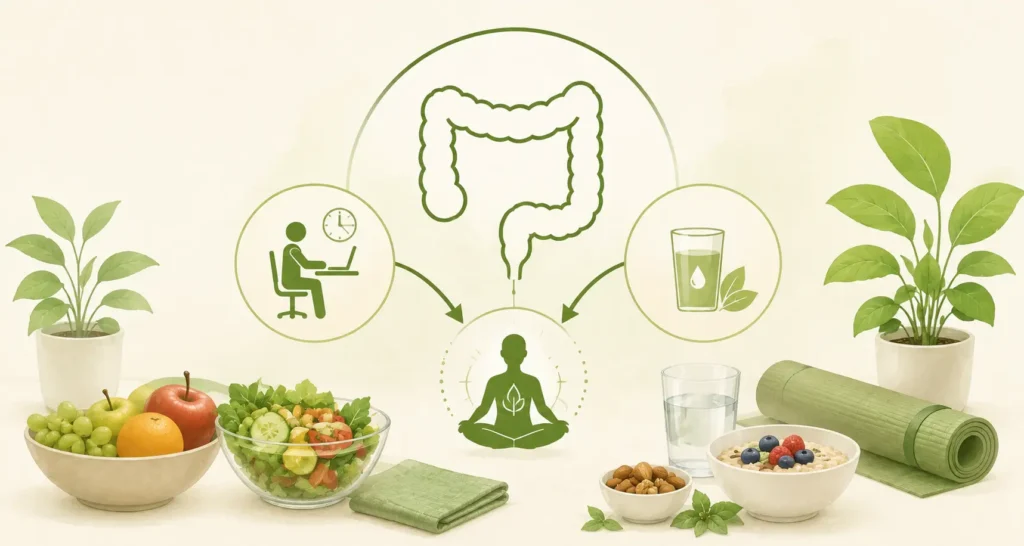
Even though piles and fissures look and feel different, they usually trace back to the same starting point, chronic constipation and straining during bowel movements.
A low fiber diet, inadequate water intake, prolonged sitting, pregnancy, delaying the urge to pass stool and a sedentary routine all increase pressure in the rectal area and lead to harder stools. Over time, this repeated straining either weakens and swells the veins, leading to piles, or tears the delicate anal lining, leading to a fissure.
Ayurveda frames this as aggravated Vata disturbing the downward movement of waste (Apana Vayu), combined with weak Agni that fails to properly digest food, leading to Ama buildup and harder, drier stools. This is exactly why fixing digestion is considered the starting point for healing either condition, not just managing the local symptom.
What Actually Heals Piles and Fissures, the Ayurvedic Way
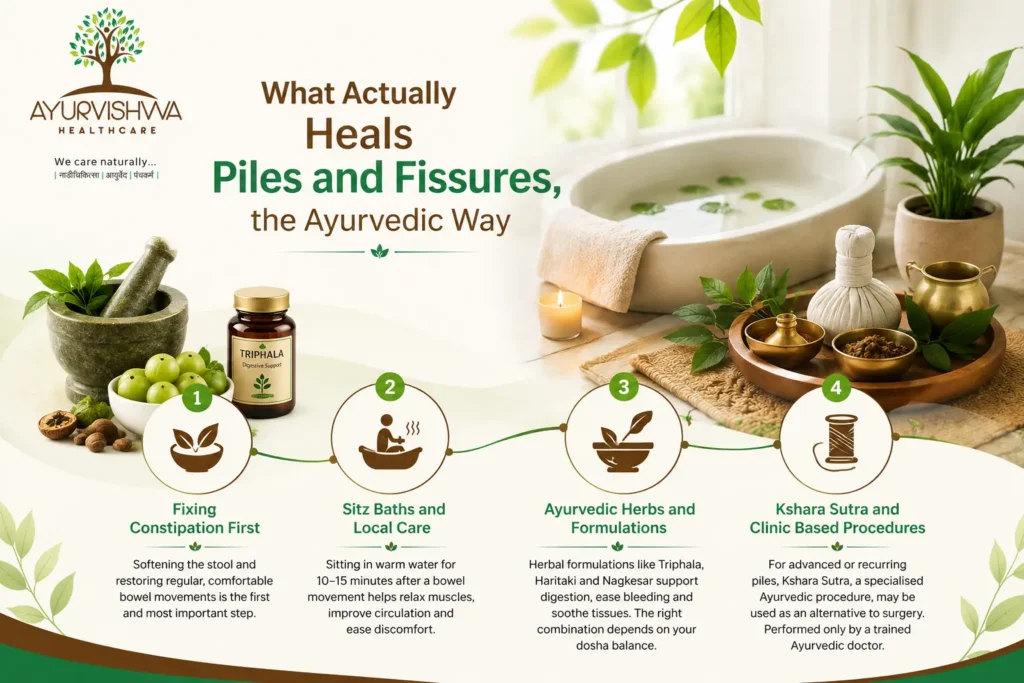
1. Fixing Constipation First
Since straining is the common root cause, softening the stool and restoring regular, comfortable bowel movements is usually the first and most important step, both for healing and for preventing recurrence.
2. Sitz Baths and Local Care
Sitting in warm water for ten to fifteen minutes after a bowel movement is traditionally recommended to relax the anal muscles, improve circulation to the area and ease discomfort, particularly helpful for fissures.
3. Ayurvedic Herbs and Formulations
Classical formulations built around herbs such as Triphala, Haritaki and Nagkesar are traditionally used to support digestion, ease bleeding and soothe the affected tissue. The right combination depends on whether Vata, Pitta or Kapha is dominant in your presentation, which is best assessed by a doctor rather than self selected.
4. Kshara Sutra and Clinic Based Procedures
For more advanced or recurring piles, a specialised Ayurvedic para surgical thread therapy called Kshara Sutra is sometimes used as an alternative to conventional surgery. This is performed only by a trained Ayurvedic doctor after a thorough examination, and is not something to attempt or expect from herbal remedies alone.
This information is for general wellness awareness only and is not intended to diagnose, treat, cure or prevent any disease. Please consult Dr. Vishwas Ghatge or a qualified Ayurvedic doctor for an accurate diagnosis and a treatment plan suited to your specific condition.
Support Healthy Digestion With Sukh Pachan Vati
Since constipation and straining sit at the root of most piles and fissure cases, supporting regular, comfortable digestion is one of the most useful everyday habits you can build. Ayurvishwa’s Sukh Pachan Vati is formulated to support healthy digestion and regular bowel movements as part of your overall care plan.
Explore DigicareDiet and Lifestyle Tips for Healing and Prevention
- Build meals around fiber rich foods such as whole grains, fruits, vegetables and soaked lentils
- Drink adequate water through the day to keep stools soft
- Never delay or hold back the urge to pass stool
- Avoid excess fried, spicy and heavily processed food, which can aggravate Pitta
- Stay physically active and avoid sitting for very long stretches
- Practice a warm sitz bath after bowel movements if you have a fissure
Get a Digestion First Care Plan Based on Your Prakriti
Through Prakriti Parikshan, our doctors identify your unique constitution and build a diet, herb and lifestyle plan suited to your specific condition, whether it is piles, a fissure, or both together.
Fill in the form and our team will help you book a consultation at your nearest Ayurvishwa clinic.
Common Mistakes People Make With Piles and Fissures
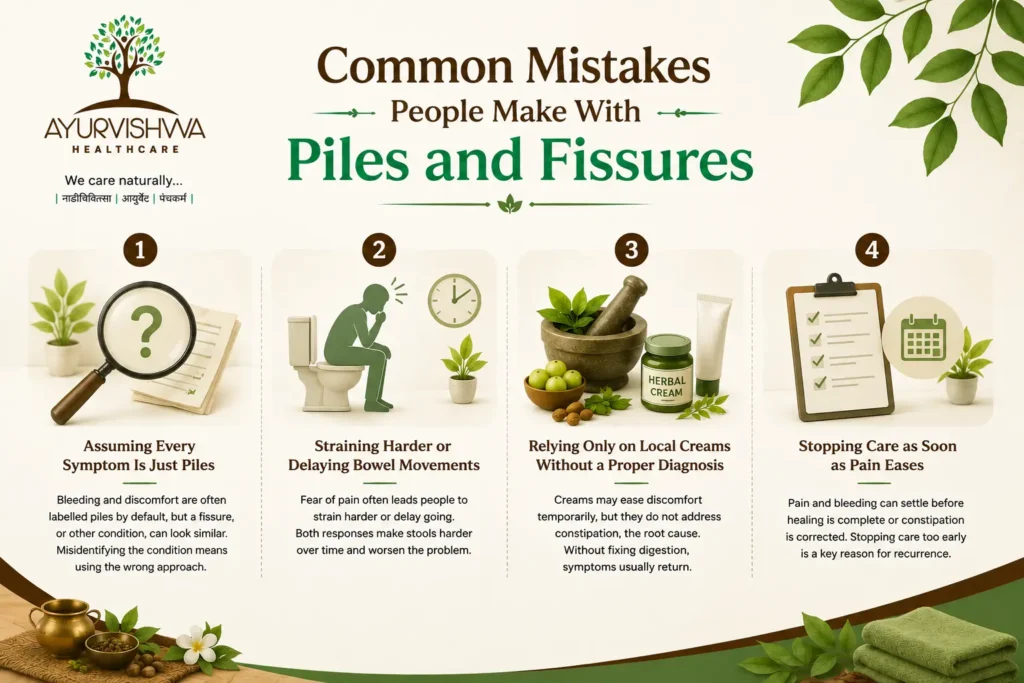
1. Assuming Every Symptom Is Just Piles
Bleeding and discomfort are often labelled piles by default, but a fissure, and occasionally other conditions, can look similar. Misidentifying the condition often means using the wrong care approach and staying uncomfortable for longer.
2. Straining Harder or Delaying Bowel Movements
Fear of pain often leads people to strain harder to finish quickly, or to delay going altogether. Both responses make stools harder over time and worsen the underlying problem.
3. Relying Only on Local Creams Without a Proper Diagnosis
Over the counter creams may ease surface discomfort temporarily, but they do not address constipation, the shared root cause behind most cases. Without fixing digestion, symptoms usually return.
4. Stopping Care as Soon as Pain Eases
Pain and bleeding can settle before the underlying tissue has fully healed, or before constipation is properly corrected. Stopping care too early is one of the most common reasons piles and fissures keep coming back.
Guessing between piles and a fissure rarely leads to lasting relief. Book a Nadi Pariksha based consultation with Ayurvishwa Healthcare and get a clear diagnosis along with a care plan built around your Prakriti.
Book Your ConsultationFrequently Asked Questions
Piles are swollen veins in the rectum or anus that often bleed with little pain, especially in the early stages. A fissure is a small tear in the anal lining that causes sharp, intense pain during and after passing stool. The two conditions can also occur together.
Yes, both can cause bright red blood, but the pattern usually differs. Piles often cause blood on the stool or tissue with little pain, while a fissure causes a lighter, streaked bleeding along with a sharp burning or cutting sensation.
Both are closely linked to constipation and straining during bowel movements. A low fiber diet, inadequate water intake, prolonged sitting, pregnancy and delaying the urge to pass stool are common contributing factors for both conditions.
Ayurveda calls piles Arsha and fissures Parikartika. Both are understood as imbalances of Vata and Pitta dosha linked to weak Agni, or digestive fire, and the buildup of Ama, or toxins, largely driven by poor digestion and chronic constipation.
Many cases of piles and fissures improve with consistent diet changes, better bowel habits, and doctor guided Ayurvedic care. More advanced or chronic cases may need clinic based procedures such as Kshara Sutra, which your doctor can advise on after an examination.
See a doctor if bleeding continues for more than a week, if pain is severe, or if you notice a lump that does not go away. Seek prompt medical evaluation for any rectal bleeding if you are over 40, have unexplained weight loss, or a change in bowel habits lasting more than a few weeks.
A high fiber diet with whole grains, fruits and vegetables, along with adequate water intake, softens the stool and reduces straining. Warm, freshly cooked meals are generally easier to digest than fried or heavily spiced food.
No. Piles are swollen veins, a fissure is a small tear in the skin, and a fistula is an abnormal tunnel that usually forms from an infected gland near the anus. A fistula typically needs a different treatment approach and should be assessed by a doctor.
Mild cases often improve within a few weeks with consistent diet and lifestyle changes. Chronic or more advanced cases can take longer and may need additional Ayurvedic therapies or clinic based procedures under your doctor’s guidance.
Ayurveda focuses on correcting the root cause, mainly constipation and weak digestion, alongside doctor guided herbal support and local care. Many people experience lasting relief with consistent care, though results vary depending on the severity and stage of the condition.
Getting the Right Care for the Right Condition
Piles and fissures may sit in the same neighborhood, but they are not the same problem, and treating one like the other rarely brings the relief you are looking for. The good news is that both share a fixable root cause, and once digestion and bowel habits improve, healing tends to follow.
At Ayurvishwa Healthcare, our doctors start with a clear diagnosis, then build a plan around your Prakriti using Nadi Pariksha, diet, herbal support and, where needed, clinic based procedures. Explore our Ayurvedic treatment for piles or Ayurvedic care for anal fissure pages for a complete look at our approach. Ready to take the next step? Book your appointment at any of our 15+ clinics across Maharashtra today.