


Summary: Every year around Diwali, firecracker smoke, stubble burning haze and rising dust levels combine to make breathing harder across much of India. This guide explains how air pollution actually damages your lungs, why the Diwali period is especially harsh, which warning signs to watch for, and what Ayurveda can realistically offer through herbs, home remedies and lifestyle changes to protect your respiratory health.
We use classical Ayurvedic terminology and general ranges rather than promises, because understanding what is happening in your body is more useful than a clinic claiming a guaranteed fix for pollution related breathing problems.
Written and medically reviewed by Dr. Vishwas Ghatge, BAMS, MD (Ayurveda), Founder of Ayurvishwa Healthcare, practising Nadi Pariksha guided Ayurvedic medicine for 18+ years. This content is for general wellness awareness and is not intended to diagnose, treat, cure or prevent any disease.
Pollution and Your Lungs, at a Glance
Firecracker smoke
Contains PM2.5, sulphur dioxide and heavy metals that penetrate deep into lung tissue. The effects peak during Diwali night and for two to four days afterwards.
Post Diwali smog
Firecracker residue combines with vehicle exhaust and stubble burning smoke. Cold, still air traps it close to the ground, often for a week or more.
Dust and allergens
Construction dust, road dust and seasonal pollen add to the load your lungs handle daily, triggering allergic coughs and sinus congestion year round.
Common symptoms
Persistent dry cough, throat irritation, nasal congestion, breathlessness on exertion, wheezing, and worsening of existing asthma or allergies.
Ayurvedic framework
Pranavaha Srotas (the respiratory channel) is affected by Dhumavisha (smoke toxin), aggravating Kapha and Vata in the lungs and throat.
These are general patterns seen during the pollution season. Individual severity depends on pre existing conditions, exposure levels and your overall respiratory health.
How Air Pollution Actually Affects Your Lungs
When you breathe polluted air, the damage happens at multiple levels. Coarse particles, PM10 and above, settle in the nose and upper airways, causing irritation, sneezing and congestion. Finer particles, PM2.5 and smaller, travel deeper into the bronchioles and alveoli, the tiny air sacs where oxygen exchange takes place. Once there, they trigger an inflammatory response: the body floods the area with immune cells, the airway lining swells, mucus production increases, and the result is a persistent cough, tightness and sometimes wheezing.
Repeated exposure compounds this. The airway lining becomes chronically inflamed, the cilia, the tiny hair like structures that sweep debris out of your lungs, become sluggish or damaged, and your lungs gradually lose their ability to clear toxins efficiently. People with pre existing conditions such as asthma, bronchitis, COPD or allergic rhinitis feel this faster and harder, but healthy lungs are not immune either.
For a broader understanding of how Ayurveda approaches respiratory conditions, see our page on Ayurvedic treatment for respiratory disorders.
Why the Diwali Period Is Especially Hard on Your Lungs
Diwali smoke is not ordinary air pollution. Firecrackers release a concentrated burst of sulphur dioxide, nitrogen dioxide, heavy metals and ultrafine particulate matter, all at once, across an entire city. Within hours, AQI readings in many Indian cities can jump from moderate to severe or hazardous, levels at which even short exposure causes measurable airway irritation.
Several factors make this worse. The festivities often coincide with the start of winter, when temperature inversions trap pollutants close to the ground. Stubble burning in northern states adds its own plume. The result is a smog that can persist for a week or more after Diwali night. People with dust allergies, sinus problems or asthma often report their worst episodes during this exact window.
And it is not just outdoor air. Firecracker residue, dhoop and agarbatti smoke inside homes, and cooking fumes in poorly ventilated kitchens mean your lungs get little relief even indoors unless you take specific steps.
Warning Signs That Pollution Is Affecting Your Breathing
- A dry cough that lingers more than a week after Diwali, especially one that worsens at night or early morning
- Throat irritation, scratchiness or a burning sensation that over the counter lozenges do not resolve
- Nasal congestion or sinus pressure that feels like a cold but without fever or body ache
- Mild breathlessness during routine activities like climbing stairs or brisk walking
- Wheezing sounds while breathing, even if you have no history of asthma
- Increased mucus production, especially thick or discoloured mucus
- Eye burning and watering that persists through the day
These symptoms are your body telling you its defences are overwhelmed. They are common and usually manageable, but ignoring them allows chronic airway irritation to settle in.
When to Get Urgent Medical Care
Most pollution related breathing problems are uncomfortable but manageable. A few situations, however, need prompt medical evaluation rather than home remedies.
- Severe breathlessness at rest, or breathlessness that worsens rapidly
- Chest tightness or pain that does not ease with rest
- Blue or grey tinge around lips or fingernails, a sign of inadequate oxygen
- High fever with a productive cough, which can indicate a lung infection like pneumonia rather than simple irritation
- A known asthma patient whose inhaler is not providing adequate relief
- Coughing up blood or heavily discoloured sputum
These signs can mean the problem has moved beyond airway irritation into territory that needs medical intervention, antibiotics, bronchodilators or monitoring. Ayurvedic support has a real place in respiratory care, but always after these possibilities have been assessed.
The Ayurvedic View: Pranavaha Srotas and Dhumavisha
Ayurveda identifies the respiratory system as Pranavaha Srotas, the channel responsible for carrying Prana, or life force, through the body. When this channel is disrupted, the effects show up as cough, breathlessness, chest heaviness and impaired voice.
Pollution related damage fits the classical concept of Dhumavisha, or smoke toxin, a recognised category of environmental poisoning in Ayurvedic texts. Dhumavisha aggravates both Kapha and Vata in the lungs: Kapha increases mucus, creates congestion and produces heaviness in the chest, while Vata dries the airway lining, disturbs the natural downward flow of Prana Vayu and triggers the spasmodic, dry cough that so many people experience after Diwali.
The approach therefore works on two fronts: clearing accumulated Kapha to open the airways and restore mucus to its healthy thin consistency, and pacifying Vata to stop the irritation cycle and allow the airway lining to repair. This is why a blanket “take this one herb” approach is less effective than a personalised assessment of which pattern predominates in your case.
To understand how we use pulse diagnosis to identify these patterns, read about Nadi Pariksha at Ayurvishwa.
Best Ayurvedic Herbs for Lung Protection
Several herbs have a long history of use in classical Ayurvedic respiratory formulations. Here is what each one traditionally addresses and where honest limits lie.
Tulsi (Holy Basil)
Tulsi is used as a Kapha and Vata pacifier with traditional respiratory affinity. It supports bronchial clearance and is commonly consumed as a tea or fresh leaf preparation. Regular use during pollution season is a reasonable, low risk step, though it should not be expected to counteract heavy particulate exposure on its own.
Yashtimadhu (Mulethi / Licorice Root)
Yashtimadhu is one of the most widely used herbs for throat and upper airway soothing. It coats and calms irritated mucous membranes, supports voice clarity, and is traditionally indicated for dry cough. The mulethi benefits for throat are well recognised in both Ayurvedic and modern herbal practice. Use it as a decoction, chewed root, or in formulated preparations. Prolonged high dose use should be monitored due to its effect on blood pressure and potassium levels.
Pippali (Long Pepper)
Pippali is a classical Kapha reducing herb with a specific affinity for the lungs. It is used to reduce congestion, support healthy mucus consistency and improve respiratory comfort. Pippali is a key ingredient in the Trikatu combination and in many Ayurvedic cough and lung formulations. It is warming, so it is best used under guidance if you have a strong Pitta constitution.
Vasaka (Adhatoda / Malabar Nut)
Vasaka is one of the most classically referenced respiratory herbs in Ayurveda, traditionally used for productive cough, bronchial congestion and to support healthy expectoration. It is particularly useful when the problem involves excess, thick mucus rather than a dry, irritating cough.
Turmeric (Haridra)
Turmeric is a systemic anti inflammatory used to calm airway irritation and support the body’s natural response to environmental toxins. Turmeric milk for throat infection is a widely used home preparation, and while it does provide soothing comfort and anti inflammatory support, it is not a substitute for antibiotics when a confirmed bacterial infection is present. Combine it with black pepper and a healthy fat for better absorption.
All herbs mentioned are part of the classical Ayurvedic pharmacopoeia and are used in personalised formulations after assessment, not as standalone guaranteed solutions. Dosage, combination and duration should be guided by a qualified Ayurvedic practitioner.
Home Remedies for Dust Allergy and Pollution Cough
These dust allergy home remedies and respiratory comfort measures use ingredients commonly available at home. They are supportive, not curative, and work best alongside proper assessment and care.
- Turmeric milk with black pepper: warm milk with half a teaspoon of turmeric and a pinch of black pepper before bed soothes an irritated throat and supports overnight airway recovery
- Tulsi and ginger kadha: boil four to five fresh tulsi leaves with a small piece of crushed ginger in water for ten minutes. Sip warm twice daily during high pollution days for bronchial comfort
- Steam inhalation with ajwain or eucalyptus: plain steam, or steam with a few ajwain seeds or two drops of eucalyptus oil, helps loosen mucus and relieve nasal congestion. Avoid adding too many essential oils, more is not better
- Honey with mulethi powder: half a teaspoon of mulethi powder mixed with a teaspoon of raw honey, taken twice daily, coats the throat and eases a persistent dry cough
- Warm salt water gargle: gargling with warm salt water two to three times daily reduces throat inflammation and clears accumulated irritants
- Nasya with plain sesame oil: applying two drops of plain, warm sesame oil in each nostril in the morning protects the nasal lining from dust and dryness. This is a traditional Pratimarsha Nasya practice
For more guidance on building immunity naturally, see our guide on building immunity with Ayurveda.
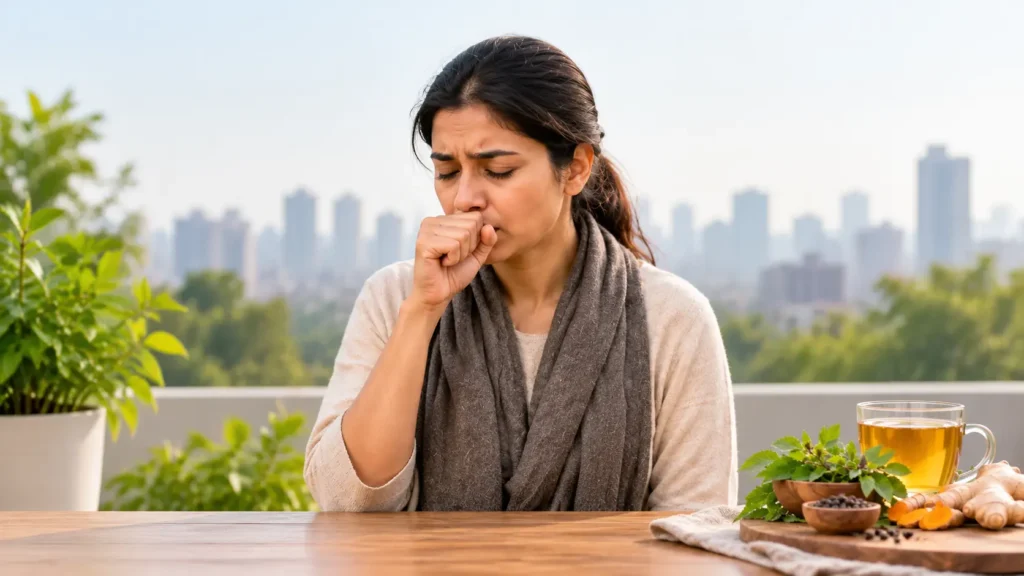
Struggling With a Post Diwali Cough That Will Not Settle?
Get a personalised assessment through Nadi Pariksha, with an honest plan and no promises attached.
Diet and Lifestyle for Lung Health During Pollution Season
What to Include
- Warm, cooked foods that are easy to digest: soups, khichdi, steamed vegetables and dal reduce the digestive burden so your body can direct energy toward clearing toxins from the lungs
- Foods rich in Vitamin C and antioxidants: amla, citrus fruits, guava and pomegranate support the body’s natural defence against oxidative damage from pollution
- Warm water throughout the day rather than cold or iced drinks, which Ayurveda considers Kapha aggravating in the respiratory context
- A small piece of fresh ginger chewed before meals to support Agni and reduce Ama formation
- Jaggery in moderate amounts, traditionally used to help the lungs expel dust particles
What to Reduce or Avoid
- Cold dairy products, especially cold milk, ice cream and curd at night, which increase Kapha and mucus congestion
- Deep fried, heavy and oily foods that slow digestion and increase Ama
- Excess sugar, which promotes systemic inflammation
- Cold drinks and refrigerated foods during high pollution periods
- Smoking or exposure to incense in poorly ventilated spaces, adding to the load your lungs are already handling
Practical Lifestyle Steps
- Use an N95 mask outdoors on days when AQI is above 200, especially during morning walks and commutes
- Keep windows closed during peak pollution hours, typically late evening through early morning in winter
- Run an air purifier with a HEPA filter if available, particularly in bedrooms
- Practice Pranayama, specifically Anulom Vilom and Bhramari, in a clean indoor space to strengthen lung capacity and improve breathing patterns. Avoid outdoor Pranayama on high AQI days
- Shower and change clothes after extended outdoor exposure to remove particulate matter from skin, hair and clothing
Lung Detox: What Ayurveda Can and Cannot Do
The phrase “lung detox” is widely searched and widely misused. Ayurvedic methods such as Vamana (therapeutic emesis), Nasya (nasal administration of medicated oils) and specific herbal formulations do support the body’s natural clearance mechanisms and are part of the classical Panchakarma framework. They can help reduce accumulated Kapha, clear mucus, soothe inflamed airways and improve breathing comfort over time.
What they cannot do is reverse structural lung damage from years of heavy pollution exposure, nor can they substitute for medical treatment when a lung infection, COPD exacerbation or asthma attack is underway. A clinic advertising a three day lung detox that will undo years of pollution damage is overstating what any system of medicine can deliver.
Realistic lung detox Ayurvedic methods involve a combination of dietary changes, herbal support, Pranayama and, in some cases, Panchakarma procedures over a course of weeks to months, not a quick fix.
How Long Recovery Realistically Takes
Mild pollution related symptoms, a scratchy throat, nasal congestion, a light cough, usually settle within one to two weeks with home remedies, dietary adjustments and reduced exposure. A stubborn post Diwali cough that lingers beyond two weeks typically needs clinical assessment, since it may reflect deeper airway irritation or an underlying allergic or infectious component.
For people with pre existing respiratory conditions, recovery takes longer and often requires ongoing management rather than a one time treatment. Building long term respiratory resilience through seasonal Panchakarma, daily Nasya, regular Pranayama and dietary discipline is a six to twelve month commitment that shows cumulative results.
Why You Should Question Guaranteed Lung Health Claims
Search online for “lung detox” or “Ayurvedic cure for pollution cough” and you will find no shortage of clinics promising a complete solution. Be sceptical. Air pollution is a chronic, environmental exposure that no single herb, syrup or therapy can fully undo.
Ayurveda has a genuine, well documented role in supporting respiratory health: reducing inflammation, improving mucus clearance, strengthening lung capacity over time, and making day to day breathing more comfortable. But that role is supportive and cumulative. Under the Drugs and Magic Remedies (Objectionable Advertisements) Act, advertising a guaranteed cure for respiratory diseases is not permitted in India, and a practitioner who frames their treatment honestly, including its limits, is usually more reliable than one who does not.
What to Ask at Your First Consultation
- Is my cough likely pollution related, allergic, or could there be an infection?
- Do I need a chest X ray or pulmonary function test before starting herbal treatment?
- Which dosha pattern is driving my symptoms, and how does that change the approach?
- Should I be seeing a pulmonologist alongside Ayurvedic care?
- What should I realistically expect in terms of timeline and improvement?
- What would tell us this plan is not working and needs to change?
A trustworthy physician will welcome each of these and answer clearly, including telling you plainly when a specialist referral is needed.
Our Approach to Respiratory Health at Ayurvishwa
- A personalised assessment through Nadi Pariksha and Prakriti Parikshan, identifying your specific Kapha Vata pattern rather than following a generic protocol
- Honest scoping: we tell you when your symptoms need a pulmonologist’s input or diagnostic tests before herbal support can begin
- Seasonal respiratory care plans that combine herbs, diet, Pranayama guidance and, where appropriate, Panchakarma therapies
- Care led by Dr. Vishwas Ghatge, BAMS, MD (Ayurveda), with 18+ years of clinical experience, across 15+ clinics in Maharashtra
Call +91 8448449260, WhatsApp +91 91684 00980, or email ayurvishwahealthcare@gmail.com to book your consultation.
📋 In This Article
- How Pollution Affects Lungs
- Why Diwali Is Worse
- Warning Signs
- When to Get Urgent Care
- The Ayurvedic View
- Best Herbs for Lungs
- Home Remedies
- Diet and Lifestyle
- Lung Detox
- Realistic Timeline
- Guaranteed Cure Claims
- What to Ask
- Our Approach
- FAQs
Get a personalised assessment.
Air Pollution and Lung Health, Frequently Asked Questions
Air pollution effects on health extend beyond the lungs. Fine particles (PM2.5) penetrate deep into lung tissue, causing inflammation, increasing mucus production and impairing oxygen exchange. Over time, chronic exposure raises the risk of respiratory infections, worsens asthma and allergies, and contributes to systemic inflammation that can affect cardiovascular health. Short term exposure during events like Diwali causes immediate symptoms like cough, throat irritation and breathlessness.
The best Ayurvedic herbs for lungs include Tulsi (bronchial clearance and Kapha reduction), Yashtimadhu or Mulethi (throat soothing and airway coating), Pippali (congestion reduction and lung affinity), Vasaka (supporting healthy expectoration), and Turmeric (anti inflammatory support). These work best in personalised combinations after assessment, not as standalone solutions.
Turmeric milk for throat infection is a traditional preparation that provides anti inflammatory and soothing support. It can ease throat irritation and support overnight recovery. However, it is not a substitute for antibiotics when a confirmed bacterial infection is present. Adding black pepper and a healthy fat improves curcumin absorption.
Effective dust allergy home remedies include steam inhalation with ajwain or eucalyptus, Pratimarsha Nasya with warm sesame oil (two drops per nostril daily), Tulsi and ginger kadha, warm salt water gargling, and honey with mulethi powder. These reduce symptoms but do not eliminate the allergy itself. Reducing dust exposure through masks, air purifiers and keeping windows closed on high AQI days is equally important.
Mulethi benefits for throat include coating and calming irritated mucous membranes, easing dry cough, supporting voice clarity, and reducing throat inflammation. It can be used as a chewed root, decoction or powder mixed with honey. Prolonged high dose use should be monitored due to potential effects on blood pressure and potassium levels.
Lung detox Ayurvedic methods such as Vamana, Nasya and specific herbal formulations do support the body’s natural clearance mechanisms and can improve breathing comfort over weeks to months. However, they cannot reverse structural lung damage from years of heavy exposure, nor replace medical treatment during an active infection or COPD exacerbation. Genuine improvement is cumulative, not a quick fix.
Mild symptoms like a scratchy throat and light cough typically settle within one to two weeks with home remedies and reduced exposure. A cough that lingers beyond two weeks deserves clinical assessment, as it may reflect deeper airway irritation, an allergic component or an underlying infection.
Pranayama is beneficial for lung capacity and breathing patterns, but it should be practised in a clean indoor space on high AQI days, not outdoors where you would be drawing more polluted air deeper into your lungs. Anulom Vilom and Bhramari are generally safe and supportive during pollution season when done indoors.
See a doctor if your cough persists beyond two weeks, if you develop fever with productive cough, if you experience severe breathlessness at rest, chest pain, blue discolouration around lips, or if a pre existing condition like asthma is worsening despite your usual management. These signs warrant medical evaluation rather than home or herbal remedies alone.
Many traditional remedies like Tulsi kadha, steam inhalation and turmeric milk are generally safe for children and elderly people at adjusted quantities. However, specific herbal formulations, dosages and Panchakarma procedures should always be guided by a qualified Ayurvedic practitioner who accounts for age, constitution and any existing conditions. Self medication with concentrated herbal preparations is not recommended for either group.
Breathe Easier With a Plan That Fits Your Lungs
A personalised assessment through Nadi Pariksha, honest guidance on what will actually help, and a realistic timeline for your respiratory health.