

If you’ve noticed extra strands on your pillow, comb, or bathroom floor during the rainy season, you’re not alone. Hair fall increases noticeably during the monsoon, and for many people, it can be worrying. The good news? With the right hair care routine, diet, and a few Ayurvedic practices, monsoon hair fall control is absolutely achievable.
According to Ayurveda, the monsoon (Varsha Ritu) aggravates Vata Dosha and weakens Agni (digestive fire), which affects nutrient absorption and, in turn, hair health. Combined with high humidity, sweaty scalp conditions, and exposure to rainwater, the season creates a perfect storm for weakened roots and increased shedding.
In this complete guide, you’ll learn how to stop hair fall in monsoon with a proper hair care routine, effective home remedies, the right diet, and common mistakes to avoid — all backed by Ayurvedic wisdom and practical, easy-to-follow tips.
Why Does the Monsoon Season Cause Hair Fall?

Understanding the causes of hair fall in rainy season is the first step toward controlling it. While it’s normal to shed 50–100 strands a day, many people experience nearly double this amount during the monsoon. Here’s why hair fall increases in monsoon:
1. High Humidity Weakens Hair Roots
The link between humidity and hair fall is well established. Excess moisture in the air makes hair absorb hydrogen, causing the hair shaft to swell and become brittle. Weakened strands break easily, and roots loosen their grip on the scalp.
2. Sweaty Scalp and Clogged Follicles
Humidity keeps the scalp damp and sweaty for longer periods. A sweaty scalp creates hair loss conditions by clogging follicles with sweat, oil, and dirt — weakening roots and slowing healthy hair growth.
3. Fungal Infections and Dandruff
A constantly damp scalp becomes a breeding ground for fungal growth, leading to dandruff, itching, and flaking. Scratching an infected scalp further damages roots and accelerates shedding. If you notice persistent scalp infections, our page on Ayurvedic care for fungal infections explains this in more detail.
4. Rainwater Exposure
Rainwater, especially the first few showers of the season, may carry dust, pollutants, and acidic elements that strip the scalp’s natural oils and irritate hair roots.
5. The Ayurvedic View: Vata Aggravation and Weak Agni
Ayurveda explains that during Varsha Ritu, aggravated Vata Dosha causes dryness and brittleness in hair, while weakened Agni reduces the absorption of nutrients that nourish hair roots. Poor digestion during this season is closely connected to hair health — a principle we also explain in our guide on building immunity during the monsoon with Ayurveda.
Worried About Excessive Hair Fall? Get Expert Ayurvedic Guidance
At Ayurvishwa Healthcare, our experienced Ayurvedic doctors identify the root cause of your hair fall through Nadi Pariksha and a detailed assessment of your Prakriti, digestion, and lifestyle. Instead of temporary fixes, we help you address the internal imbalance behind hair loss.
Book your consultation today and take the first step toward stronger, healthier hair.
The Best Monsoon Hair Care Routine for Healthy Roots
A consistent monsoon hair care routine is your strongest defense against seasonal hair fall. Small daily habits protect your roots from humidity, sweat, and infection. Here’s a simple routine you can follow:
1. Wash Your Hair 2–3 Times a Week
Wondering how often to wash hair in monsoon? Two to three times a week is ideal for most people. This keeps the scalp clean and free of sweat and oil buildup without stripping natural moisture. If you’re caught in the rain, wash your hair the same day to remove pollutants.
2. Choose a Mild, Herbal Cleanser
Rather than searching for the “best anti-hair fall shampoo” with harsh chemicals, choose a mild, sulfate-free herbal shampoo with ingredients like Amla, Bhringraj, Shikakai, Reetha, or Neem. These traditional Ayurvedic ingredients cleanse gently while supporting scalp health.
3. Oil Your Scalp the Right Way
Many people stop oiling in the rainy season — but Ayurveda recommends the opposite. Here’s how to apply oil in rainy season correctly:
- Use warm (not hot) oil such as coconut, sesame, or Bhringraj oil.
- Massage gently into the scalp 30–60 minutes before washing.
- Avoid leaving oil on overnight during monsoon, as a damp, oily scalp can invite fungal growth.
- Limit oiling to 1–2 times a week.
4. Dry Your Hair Completely
Never tie or sleep on damp hair. Pat dry with a soft towel and let hair air-dry fully. Dampness is the biggest trigger for fungal infections and root weakening during the monsoon.
5. Use a Wide-Toothed Comb
Wet hair is at its weakest. Detangle gently with a wide-toothed wooden comb, starting from the ends and working upward. Avoid brushing wet hair aggressively.
6. Keep Hair Accessories Clean and Dry
Combs, hair ties, towels, and pillow covers can harbor fungus in humid weather. Wash them regularly and never share them during the rainy season.
Is your hair fall persisting despite a good hair care routine? It may signal an internal imbalance. Consult Dr. Vishwas Ghatge at Ayurvishwa Healthcare for a personalized Ayurvedic assessment and hair fall treatment plan.
Consult Ayurvishwa DoctorsTop Home Remedies to Control Monsoon Hair Fall
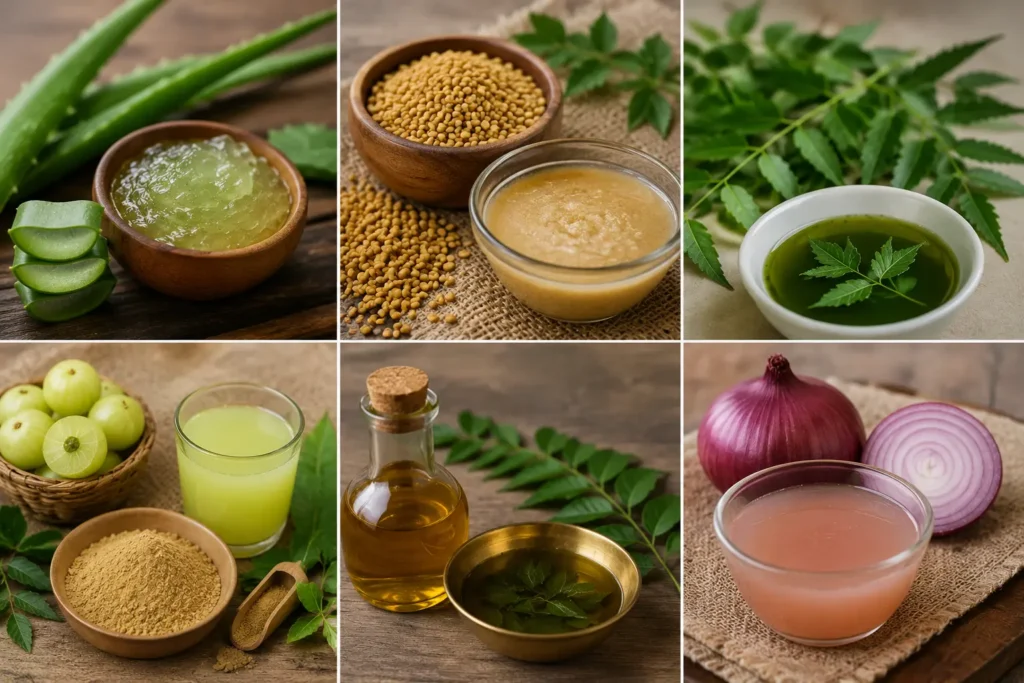
Ayurveda offers several time-tested home remedies for hair fall in monsoon using simple kitchen and garden ingredients. These natural ways to stop hair fall at home are gentle, affordable, and effective when used consistently.
1. Aloe Vera for Hair Fall
Aloe vera soothes the scalp, reduces itching, and supports healthy hair growth. Apply fresh aloe vera gel directly to the scalp, leave it for 30 minutes, and rinse with a mild shampoo. Use twice a week for best results.
2. Methi (Fenugreek) Seeds for Hair Growth
Methi seeds for hair growth are one of the most trusted remedies in Indian households. Soak 2 tablespoons of methi seeds overnight, grind into a paste, and apply to the scalp for 30–40 minutes before washing. Methi is rich in protein and nicotinic acid, which help strengthen hair roots.
3. Neem for Dandruff and Scalp Infections
Neem for dandruff is a classic Ayurvedic solution. Boil a handful of neem leaves in water, cool, and use as a final rinse after shampooing. Neem’s natural antifungal and antibacterial properties help keep the scalp clean and infection-free during humid weather.
4. Amla (Indian Gooseberry)
Amla is considered the ultimate hair tonic in Ayurveda. Mix amla powder with warm water to form a paste and apply to the scalp, or consume fresh amla juice daily to nourish hair from within.
5. Curry Leaves and Coconut Oil
Heat a handful of curry leaves in coconut oil until they darken, cool the oil, and massage into the scalp. This traditional remedy supports hair strength and may help maintain natural hair color.
6. Onion Juice
Rich in sulfur, onion juice supports blood circulation to hair follicles. Apply fresh onion juice to the scalp for 20–30 minutes before washing, once or twice a week.
Note: Home remedies work best for mild, seasonal hair fall. If you’re experiencing severe or prolonged hair loss, patchy bald spots, or scalp conditions, consult a qualified Ayurvedic doctor before relying on remedies alone. Learn more about our approach on our dedicated Ayurvedic hair fall treatment page.
What to Eat for Stronger Hair This Monsoon
Your hair reflects your inner health. No hair care routine can compensate for poor nutrition — which is why a proper diet for hair fall control matters even more during monsoon, when digestion is naturally weaker.
Protein-Rich Foods for Hair
Hair is primarily made of keratin, a protein. Include these protein rich foods for hair in your daily meals:
- Moong dal and other well-cooked lentils
- Paneer and fresh dairy in moderation
- Soaked almonds and walnuts
- Sprouts (lightly steamed during monsoon)
- Eggs, if included in your diet
Best Vitamins and Minerals for Hair Growth
The best vitamins for hair growth include Vitamin C, Vitamin E, Biotin, Iron, and Zinc. Get them naturally from:
- Amla, guava, and pomegranate (Vitamin C for collagen and iron absorption)
- Seasonal fruits like jamun, apple, and pear
- Well-cooked green vegetables (iron and folate)
- Pumpkin seeds and sesame seeds (zinc)
- Ghee in moderation (supports nutrient absorption)
Foods to Stop Hair Fall — the Ayurvedic Way
Since weak Agni is at the root of poor nourishment during monsoon, Ayurveda recommends warm, freshly cooked, easily digestible meals with digestive spices like ginger, cumin, and turmeric. Avoid fried foods, cold beverages, and street food that burden digestion. Everyday habits that harm digestion indirectly harm your hair too — when nutrients aren’t absorbed well, hair roots are among the first to suffer.
Also remember to drink boiled or filtered warm water throughout the day. Dehydration and contaminated water both contribute to weakened hair and scalp issues in the rainy season.
Get a Personalized Hair & Diet Plan Based on Your Prakriti
Every person’s hair fall has a different root cause — Vata dryness, Pitta heat, or Kapha-related scalp congestion. Through Prakriti Parikshan, our doctors identify your unique body constitution and create a diet and lifestyle plan tailored to your hair type and health.
Fill in the form and our team will help you book a consultation at your nearest Ayurvishwa clinic.
Common Hair Care Mistakes to Avoid in the Rainy Season
Sometimes, what you don’t do matters more than what you do. These common monsoon hair care mistakes silently worsen hair fall:
1. Tying Wet Hair
Tying wet hair damage is real — damp hair trapped in a tight bun or braid stays moist for hours, weakening roots and encouraging fungal growth. Always air-dry your hair completely before tying it.
2. Excessive Blow Drying
The side effects of blow drying include dryness, brittleness, and heat damage to the hair shaft. If you must use a dryer, keep it on the cool setting and hold it at least 15 cm away from your hair.
3. Aggressive Combing and Frequent Styling
Frizzy hair in rainy season tempts many people to over-comb, straighten, or use styling products daily. Heat styling and chemical products further weaken humidity-stressed hair. Embrace natural texture during monsoon and use a few drops of light hair serum or coconut oil to manage frizz instead.
4. Skipping Hair Wash After Getting Drenched
Rainwater carries pollutants that irritate the scalp. Always rinse and wash your hair with a mild shampoo the same day you get caught in the rain.
5. Sharing Combs and Towels
Fungal scalp infections spread easily through shared combs, towels, and pillows — especially in humid weather. Keep your hair accessories personal and dry.
6. Ignoring Persistent Hair Fall
Seasonal shedding is normal, but if hair fall continues beyond the monsoon, comes with bald patches, or is accompanied by fatigue and poor digestion, it may indicate an internal imbalance such as a thyroid issue, nutritional deficiency, or Dosha aggravation that needs professional attention.
Hair fall that doesn’t stop with home care needs a deeper diagnosis. Visit your nearest Ayurvishwa clinic for a Nadi Pariksha-based assessment and a personalized hair fall treatment plan.
Book Nadi ParikshaFrequently Asked Questions
Yes, it is normal to experience increased hair fall during the monsoon. Shedding up to 150 strands a day during this season is common due to humidity, sweaty scalp, and weakened digestion. This seasonal hair fall usually reduces as the weather changes. However, if hair fall persists after the monsoon or you notice thinning or bald patches, consult a qualified Ayurvedic doctor.
Lightweight oils such as coconut oil, Bhringraj oil, and sesame-based Ayurvedic oils are considered best for hair fall in monsoon. Apply warm oil 30–60 minutes before washing, 1–2 times a week. Avoid leaving oil on overnight during the rainy season, as a damp, oily scalp can encourage fungal growth.
Cover your hair with an umbrella, hood, or scarf when stepping out in the rain. If your hair does get wet in the rain, rinse it with clean water and wash with a mild shampoo the same day to remove pollutants, then dry your hair completely before tying it.
Washing your hair 2–3 times a week with a mild herbal shampoo is ideal during the monsoon. This keeps the scalp free of sweat, oil, and dirt buildup without stripping natural moisture. Wash the same day if you get drenched in the rain.
Yes. Humidity keeps the scalp damp, encouraging fungal growth that leads to dandruff, itching, and inflammation. Constant scratching and clogged follicles weaken hair roots and increase shedding. Neem rinses, regular hair washing, and keeping the scalp dry help control dandruff during the monsoon.
Yes. Ayurveda addresses hair fall by identifying the root cause — such as aggravated Vata or Pitta Dosha, weak Agni (digestion), stress, or nutritional deficiency — through Nadi Pariksha and Prakriti assessment. Treatment typically includes personalized diet, lifestyle changes, scalp care practices, and herbal support under a qualified doctor’s guidance.
Protein-rich foods like moong dal, paneer, soaked nuts, and eggs, along with Vitamin C sources like amla and seasonal fruits, support hair strength. Ayurveda also recommends warm, freshly cooked meals with digestive spices, since good digestion is essential for nutrients to reach the hair roots.
No, but you should oil smartly. Reduce oiling to 1–2 times a week, use warm oil, and wash it off within an hour. Avoid overnight oiling in humid weather, as prolonged dampness on the scalp can invite fungal infections and worsen hair fall.
High humidity causes hair to absorb excess moisture from the air, making the hair shaft swell and the cuticle rise — resulting in frizz. Regular gentle oiling, using a wide-toothed comb, avoiding heat styling, and applying a light serum can help manage frizzy hair in the rainy season.
Consult a doctor if hair fall continues for more than 2–3 months after the monsoon, if you notice visible thinning or bald patches, or if hair loss is accompanied by fatigue, poor digestion, irregular periods, or sudden weight changes. These may indicate an underlying condition that needs proper diagnosis and treatment.
Conclusion: Healthy Hair Starts from Within
Monsoon hair fall is common, but it doesn’t have to be inevitable. A consistent hair care routine — washing 2–3 times a week, smart oiling, keeping the scalp dry, and gentle handling — protects your hair externally. Meanwhile, a warm, nutrient-rich diet and healthy digestion nourish your hair from within.
Remember the Ayurvedic principle: hair health is a reflection of internal health. When Agni is strong, Doshas are balanced, and nutrition is absorbed well, hair naturally stays strong — in every season.
If your hair fall feels excessive, persistent, or is affecting your confidence, don’t wait for it to resolve on its own. At Ayurvishwa Healthcare, our doctors use Nadi Pariksha and detailed Prakriti Parikshan to uncover the root cause of your hair fall and create a personalized treatment plan. Explore our Ayurvedic hair fall treatment or book your appointment at any of our clinics across Maharashtra today.