

The monsoon season brings welcome relief from the summer heat, but it also increases the risk of poor digestion, low immunity, viral infections, and water-borne illnesses. According to Ayurveda, Varsha Ritu (the rainy season) naturally weakens Agni (digestive fire), making the body more vulnerable to digestive discomfort and seasonal diseases.
One of the simplest ways to stay healthy during this season is by making the right food choices. Ayurveda recommends eating warm, freshly prepared, and easily digestible meals that nourish the body, support digestion, and help maintain strong immunity throughout the rainy season. To understand the complete seasonal approach, you can also read our detailed guide on how to build immunity during the monsoon with Ayurveda.
In this guide, you’ll discover the best Ayurvedic foods to eat during the monsoon, foods to avoid, and practical dietary tips that can help keep your digestion strong and your immune system resilient during the rainy season.
Why Your Diet Matters More During the Monsoon

According to Ayurveda, the rainy season is a period when the body’s Agni (digestive fire) naturally becomes weaker. As digestion slows, the body may find it harder to digest heavy, oily, or contaminated foods, increasing the likelihood of indigestion, bloating, loss of appetite, acidity, and seasonal infections.
Modern health experts also recommend extra caution during the monsoon, as increased humidity and water contamination can promote the growth of bacteria and viruses in food and water. Choosing freshly cooked, hygienic meals and maintaining good digestive health can help reduce the risk of food-borne illnesses.
Ayurveda Recommends Foods That Are:
- Warm and freshly prepared
- Light and easy to digest
- Cooked with digestive spices
- Rich in natural nutrients
- Freshly served instead of refrigerated
These foods help support healthy digestion, nutrient absorption, and natural immunity, making it easier for your body to adapt to seasonal changes.
Ayurvedic Insight: Strong immunity begins with strong digestion. During the monsoon, prioritizing digestive health through the right foods is considered one of the most effective ways to support overall wellness.
Eat Right This Monsoon with Ayurvishwa Healthcare
At Ayurvishwa Healthcare, our experienced Ayurvedic doctors provide personalized dietary consultations based on your Prakriti (body constitution), digestive strength, and wellness goals. Through Nadi Pariksha and evidence-informed Ayurvedic care, we help you build a monsoon diet plan that truly suits your body.
Book your consultation today and take the first step toward better digestion and stronger immunity.
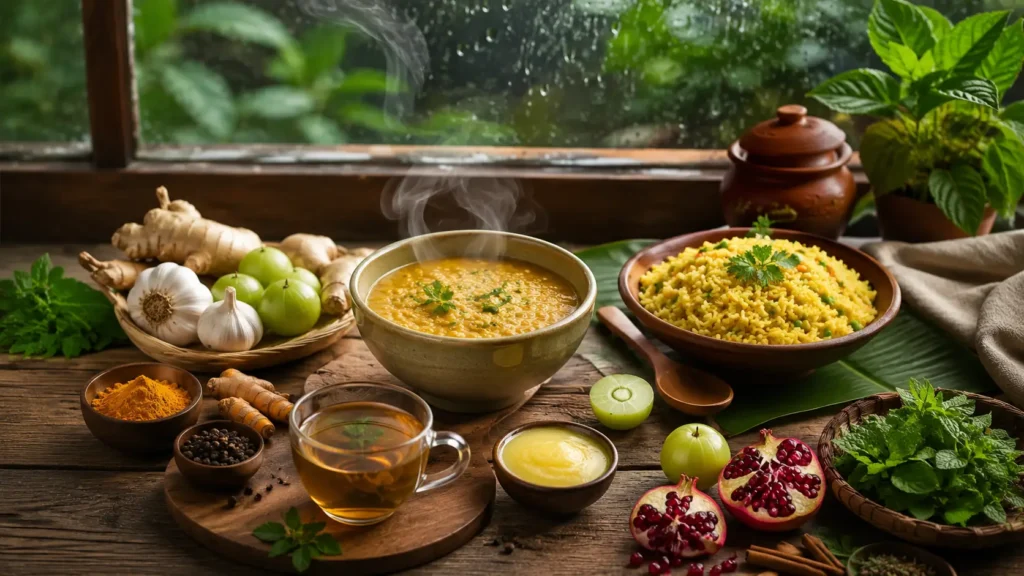
Best Ayurvedic Foods to Eat During Monsoon
A balanced monsoon diet focuses on foods that are warm, freshly prepared, and easy to digest. Ayurveda recommends choosing ingredients that help strengthen Agni (digestive fire), support digestion, and naturally improve immunity during the rainy season.
1. Moong Dal
Moong dal is one of the most easily digestible legumes in Ayurveda. It is light on the stomach, rich in protein, and ideal for maintaining energy without putting extra strain on digestion. A bowl of warm moong dal khichdi is often considered one of the best monsoon meals.
2. Old Rice and Khichdi
Freshly cooked rice, especially when combined with moong dal, creates a nourishing meal that’s gentle on the digestive system. Khichdi is commonly recommended during the monsoon because it is easy to digest while providing essential nutrients.
3. Ginger
Ginger is widely used in Ayurveda to stimulate digestion and support a healthy metabolism. Adding fresh ginger to meals, soups, or herbal tea may help relieve bloating, improve appetite, and support digestive comfort during the rainy season.
4. Garlic
Garlic contains natural compounds known for their antimicrobial properties. It also supports healthy digestion and can be included in everyday cooking to promote overall wellness during seasonal changes.
5. Turmeric
Turmeric is valued in Ayurveda for its antioxidant and anti-inflammatory properties. Regular use in curries, soups, or warm milk may help support the body’s natural immune response.
6. Amla (Indian Gooseberry)
Amla is naturally rich in Vitamin C and antioxidants, making it an excellent food for supporting immunity. It can be consumed fresh, as juice, or in traditional Ayurvedic formulations such as Chyawanprash.
7. Cow’s Ghee
When consumed in moderation, pure cow’s ghee helps nourish the body and supports digestion according to Ayurvedic principles. It also enhances the absorption of fat-soluble nutrients from food.
8. Herbal Teas
Warm herbal teas prepared with Tulsi, Ginger, Cinnamon, or Black Pepper help keep the body warm, support digestion, and provide comfort during damp weather.
9. Seasonal Fruits
Choose fresh, seasonal fruits that are properly washed and consumed in moderation. Fruits like pomegranate, apple, pear, and jamun are generally preferred over overly watery fruits during the monsoon.
10. Warm Soups and Vegetable Broths
Freshly prepared vegetable soups are light, nourishing, and easy to digest. Adding digestive spices such as cumin, black pepper, and ginger enhances both flavor and digestive support.
Ayurvedic Tip: During the monsoon, eat freshly cooked meals while they are warm. Avoid refrigerated leftovers, as they may be harder to digest and can weaken Agni, increasing the risk of digestive discomfort.
Foods to Avoid During the Monsoon
Just as important as choosing the right foods is avoiding foods that may weaken digestion. During the rainy season, Agni (digestive fire) is naturally less active, making it harder for the body to process heavy, oily, and contaminated foods. Avoiding common everyday habits that harm digestion along with the following foods can help reduce the risk of digestive problems and seasonal infections.
1. Fried and Oily Foods
Pakoras, samosas, chips, and other deep-fried snacks may be tempting during rainy weather, but excessive consumption can slow digestion and cause bloating, acidity, and indigestion.
2. Raw Salads
Raw vegetables may carry bacteria or other microorganisms if not washed properly. Ayurveda generally recommends eating well-cooked vegetables during the monsoon, as they are easier to digest.
3. Street Food
Street food may be exposed to contaminated water, dust, and poor hygiene during the rainy season, increasing the risk of food-borne illnesses. Choosing freshly prepared, hygienic meals is a safer option.
4. Cold Foods and Beverages
Cold drinks, ice cream, and chilled foods may weaken digestion in some individuals during the monsoon. Ayurveda recommends preferring warm water, herbal teas, and freshly cooked meals instead.
5. Stale or Refrigerated Leftovers
Food stored for long periods may lose freshness and become more difficult to digest. Whenever possible, eat freshly prepared meals and avoid consuming leftovers that have been refrigerated for extended periods.
6. Excess Sweets and Processed Foods
Foods high in refined sugar and processed ingredients provide little nutritional value and may contribute to poor digestion and reduced overall wellness when consumed frequently.
7. Excess Seafood and Leafy Vegetables
During the monsoon, Ayurveda traditionally advises consuming leafy vegetables and seafood with caution. Leafy greens may be more prone to contamination during this season, while seafood quality can vary depending on environmental conditions. If consumed, ensure they are fresh, thoroughly cleaned, and properly cooked.
Ayurvedic Tip: During the rainy season, choose fresh, warm, home-cooked meals over processed, refrigerated, or unhygienic foods. Supporting healthy digestion is one of the simplest ways to maintain strong immunity throughout the monsoon.
Not sure which monsoon diet suits your body type? Schedule a consultation with Dr. Vishwas Ghatge at Ayurvishwa Healthcare for a personalized Ayurvedic dietary assessment based on your Prakriti and digestive health.
Consult Ayurvishwa DoctorsSimple Ayurvedic Diet Tips for the Rainy Season
Following a few mindful eating habits during the monsoon can make a significant difference in maintaining healthy digestion and supporting your immune system. Ayurveda emphasizes how you eat just as much as what you eat.
Eat Freshly Cooked Meals
Freshly prepared, warm meals are easier to digest and less likely to harbor harmful microorganisms. Avoid eating food that has been left out for long periods or stored in the refrigerator for multiple days.
Drink Warm Water
Instead of cold drinks, sip warm or lukewarm water throughout the day. Ayurveda considers warm water beneficial for supporting digestion and reducing the accumulation of Ama (metabolic toxins).
Use Digestive Spices
Include spices such as:
- Ginger
- Cumin
- Black Pepper
- Turmeric
- Coriander
- Ajwain
These traditional spices not only enhance flavor but also help stimulate digestion and improve nutrient absorption.
Eat Moderate Portions
Overeating can put additional strain on an already weakened digestive system during the monsoon. Eat until you feel comfortably satisfied rather than overly full.
Maintain Regular Meal Timings
Eating meals at consistent times each day helps support healthy digestion and keeps your body’s natural digestive rhythm balanced.
Prefer Homemade Food
Home-cooked meals are generally fresher, more hygienic, and easier to customize according to your health needs. During the rainy season, limiting outside food can also help reduce the risk of food-borne infections.
Expert Tip: Healthy digestion is the foundation of good immunity in Ayurveda. Simple habits like eating warm, freshly prepared meals, staying hydrated, and using digestive spices can help your body stay resilient throughout the monsoon.
Frequently Asked Questions
Ayurveda recommends warm, freshly cooked, and easily digestible foods during the rainy season. Moong dal, khichdi, vegetable soups, ginger, garlic, turmeric, Amla, and herbal teas are commonly included in a healthy monsoon diet to support digestion and immunity.
Heavy, fried, and oily foods are more difficult to digest when Agni (digestive fire) is naturally weaker during the monsoon. Excessive consumption may contribute to indigestion, bloating, acidity, and sluggish digestion.
Ayurveda advises consuming leafy vegetables with caution during the monsoon, as they may be more susceptible to contamination. If included in your diet, ensure they are thoroughly washed and well-cooked before consumption.
Ayurveda generally recommends warm or lukewarm water instead of cold beverages during the rainy season. Warm fluids are believed to support healthy digestion and overall digestive comfort.
Traditional Ayurvedic herbs such as Giloy (Guduchi), Tulsi, Amla, Turmeric, Ginger, and formulations like Chyawanprash have long been used to support overall wellness and immune health. Consult a qualified Ayurvedic doctor before starting any herbal supplement.
According to Ayurveda, healthy digestion is closely linked to overall well-being. A balanced Agni (digestive fire) helps the body digest food efficiently and absorb nutrients properly, which supports the body’s natural defense mechanisms.
Yes. If you have diabetes, hypertension, thyroid disorders, food allergies, digestive conditions, or other chronic health concerns, consult a qualified Ayurvedic doctor before making significant dietary or lifestyle changes. A personalized plan based on your Prakriti (body constitution) and health condition is always recommended.
Conclusion: Eat Right, Stay Healthy This Monsoon
The foods you eat during the monsoon have a direct impact on your digestion, immunity, and overall health. According to Ayurveda, choosing warm, freshly prepared, and easy-to-digest meals helps strengthen Agni (digestive fire), supports nutrient absorption, and enables the body to adapt better to seasonal changes.
Including foods such as moong dal, ginger, turmeric, garlic, Amla, herbal teas, and freshly cooked vegetables, while limiting fried, processed, and unhygienic foods, can help reduce the risk of common rainy season illnesses and support overall well-being.
Remember, there is no single “superfood” that guarantees immunity. A balanced diet, good hygiene, adequate sleep, regular physical activity, and healthy lifestyle habits together play an important role in maintaining your body’s natural defenses. For more seasonal wellness guidance, read our complete guide on building immunity during the monsoon with Ayurveda.
Eat According to Your Prakriti
Ayurveda recognizes that every individual has a unique Prakriti (body constitution). The ideal monsoon diet may vary depending on your Vata, Pitta, or Kapha balance, digestive strength, age, and existing health conditions.
If you frequently experience digestive problems, low immunity, or recurring seasonal illnesses during the monsoon, a personalized dietary plan can make a significant difference.
Consult Our Ayurvedic Experts
At Ayurvishwa Healthcare, our experienced Ayurvedic physicians provide personalized dietary and lifestyle recommendations based on your Prakriti, health condition, and wellness goals. Through Nadi Pariksha, detailed health assessment, and evidence-informed Ayurvedic care, we help you build long-term health—not just seasonal protection.
Book your consultation today and discover the right Ayurvedic diet plan for a healthier monsoon season.