What is Nadi Pariksha? Complete Guide to Pulse Diagnosis in Ayurveda
Nadi Pariksha is the traditional Ayurvedic method of assessing health through pulse examination. It is used to understand body constitution (Prakruti), current imbalances (Vikruti), and digestion patterns as part of holistic Ayurvedic diagnosis.
Most people don’t look up Nadi Pariksha out of curiosity alone. They usually arrive here because they are looking for answers that routine advice hasn’t clarified.
Common reasons people explore pulse diagnosis in Ayurveda include:
- Recurring health issues without a clear explanation
- Medical reports that are “normal,” but the body doesn’t feel normal
- Confusion due to conflicting diet and lifestyle advice
- Interest in personalised, root-cause understanding rather than symptom-only approaches
- Curiosity about how Ayurveda assesses health beyond lab reports
In Ayurveda, pulse diagnosis is one of the traditional ways practitioners try to understand patterns of imbalance in the body. People often turn to Nadi Pariksha when they want a more individualised view of their health, especially for long-standing, lifestyle-related concerns.
What is Nadi Pariksha? (Pulse Diagnosis in Ayurveda)
Nadi Pariksha refers to pulse diagnosis in Ayurveda. The word Nadi means pulse, and Pariksha means examination or assessment.
In simple terms, Nadi Pariksha is the practice of reading subtle qualities of the pulse to gain insights into:
- Body constitution (Prakruti)
- Current imbalance (Vikruti)
- Digestive and metabolic tendencies
- Overall balance of Doshas (Vata, Pitta, Kapha)
Unlike checking pulse rate alone, Ayurvedic pulse diagnosis focuses on qualities of the pulse such as rhythm, depth, strength, and texture. These qualities are interpreted by trained practitioners in the context of the person’s lifestyle, digestion, sleep, and history.
Nadi Pariksha is not used in isolation. It is part of a broader Ayurvedic assessment that may also include ayurvedic tongue diagnosis, facial observation, and detailed questioning about daily habits.
How Nadi Pariksha Works (How Pulse Diagnosis Is Done)
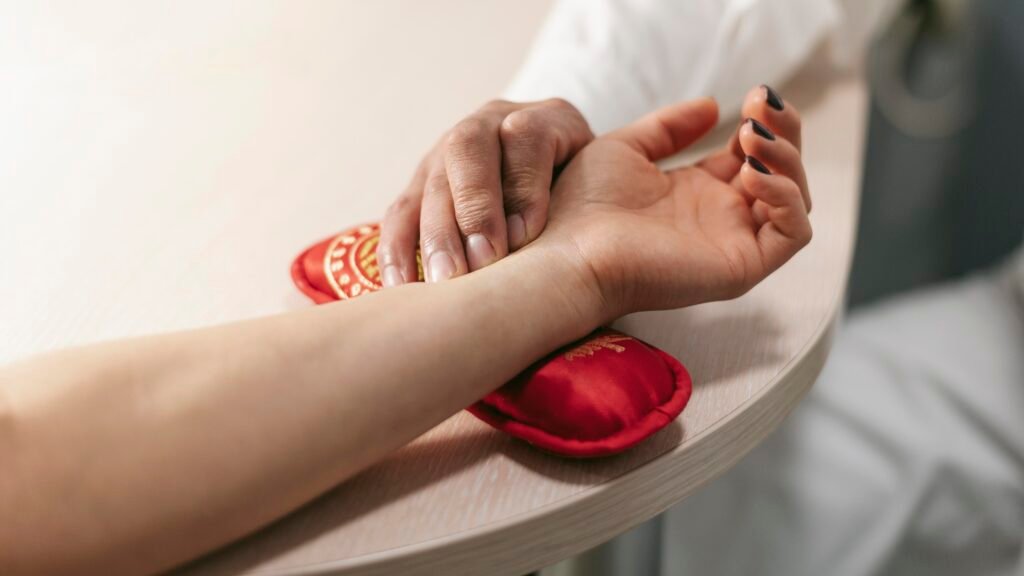
Nadi Pariksha works by assessing subtle characteristics of the pulse at specific points on the wrist. In Ayurveda, the pulse is understood as carrying information about Dosha balance (Vata, Pitta, Kapha), digestion patterns, and overall constitutional tendencies.
During pulse diagnosis in Ayurveda, a trained practitioner does not only count the pulse rate. Instead, they observe qualities such as:
- Rhythm and regularity
- Strength and volume
- Depth and tension
- Subtle variations that may reflect Dosha tendencies
These observations are interpreted in the context of:
- Your body constitution (Prakruti)
- Current imbalance (Vikruti)
- Digestive patterns (Agni)
- Lifestyle, sleep, and stress habits
This is why nadi check is not a quick, standalone test. It is a skill-based, contextual assessment that forms one part of a comprehensive Ayurvedic diagnosis.

What Happens During a Nadi Check? (What to Expect)
People often wonder what actually happens during Nadi Pariksha and how to prepare for it. While approaches vary by practitioner, a typical nadi check may involve the following steps:
What the Practitioner Does
- Gently places fingers on specific pulse points at the wrist
- Assesses pulse qualities for a few minutes
- Observes overall constitution and physical cues
- Asks questions about digestion, appetite, sleep, routine, and symptoms
What You Can Expect as a Patient
- A calm, seated assessment (usually not rushed)
- Questions about daily habits and health patterns
- Discussion of observed imbalance patterns in simple terms
- Guidance on lifestyle or diet adjustments (not a medical diagnosis)
Nadi Pariksha is typically used alongside other observational methods such as ayurvedic tongue diagnosis and general lifestyle assessment. It is not painful and does not involve any instruments.
If you’re curious about how pulse diagnosis applies to your individual health patterns, a guided assessment can help bring clarity. Book a Nadi Pariksha Assessment at Ayurvishwa
What Is the Science Behind Nadi Pariksha?
People often ask about the scientific basis of Nadi Pariksha and how pulse diagnosis in Ayurveda fits into modern understanding of health.
Nadi Pariksha originates from classical Ayurvedic texts and long-standing clinical practice. It is a traditional, observational method of assessing physiological patterns through subtle characteristics of the pulse.
Unlike modern diagnostics, which rely on measurable parameters from laboratory tests and imaging, Nadi Pariksha focuses on pattern recognition — interpreting changes in pulse qualities in the context of constitution (Prakruti), current imbalance (Vikruti), digestion (Agni), and lifestyle factors.
From a modern perspective:
- Nadi Pariksha is not a laboratory-based diagnostic test.
- It does not provide disease markers or clinical measurements.
- Its reliability depends heavily on the training, experience, and clinical judgment of the practitioner.
Some contemporary research efforts explore correlations between pulse characteristics and physiological states, but this field is still evolving. In responsible clinical practice, pulse diagnosis in Ayurveda is best used as a complementary assessment tool, alongside modern medical evaluation where appropriate.
This balanced view helps set realistic expectations: Nadi Pariksha offers a holistic interpretive lens, not a substitute for scientific testing.
Is Nadi Pariksha Accurate? What It Can & Cannot Do
People often ask if Nadi Pariksha accurate. The honest answer is that Nadi Pariksha is a traditional, observational assessment method whose usefulness depends on practitioner training, experience, and how well it is integrated with other evaluation methods.
What Nadi Pariksha Can Help With
Nadi Pariksha may help in:
- Identifying Dosha tendencies (Vata, Pitta, Kapha patterns)
- Understanding digestive and metabolic patterns (Agni)
- Noticing constitutional tendencies (Prakruti) and current imbalance (Vikruti)
- Guiding personalised lifestyle and dietary considerations
What Nadi Pariksha Cannot Do
It’s important to set realistic expectations. Nadi Pariksha:
- Does not replace medical tests or clinical diagnosis
- Cannot diagnose specific diseases on its own
- Should not be used for emergency or acute medical conditions
- Is not a guaranteed or exact “reading” of illness
In practice, pulse diagnosis in Ayurveda is most meaningful when used alongside other Ayurvedic assessments and in coordination with modern healthcare where needed. This complementary positioning is what makes it responsible and useful.
Can Nadi Pariksha Be Done Online?
With the rise of teleconsultations, many people wonder whether Nadi Pariksha can be done online.
Traditionally, Nadi Pariksha requires direct, in-person pulse assessment by a trained practitioner. The subtle qualities of the pulse — such as depth, tension, rhythm, and texture — are felt through touch and cannot be accurately assessed through video or self-reporting.
What is Possible Online
Online consultations can still be useful for:
- Discussing symptoms and health history
- Reviewing lifestyle, digestion, sleep, and routine
- Understanding basic Ayurvedic concepts like Doshas and Prakruti
- Planning next steps or preparing for an in-person assessment
What is Not Possible Online
- A true nadi check cannot be performed remotely
- Pulse qualities cannot be reliably interpreted without physical examination
- Any “remote Nadi Pariksha” should be viewed with caution
For individuals seeking an authentic pulse diagnosis in Ayurveda, in-person assessment remains the appropriate and reliable approach. Online consultations can complement this process but do not replace hands-on examination.
Best Time for Nadi Pariksha (Timing & Practical Preparation)
Traditionally, Ayurvedic pulse diagnosis is considered most informative when the body is in a neutral, settled state.
Best Timing for a Nadi Check
- Morning hours are often preferred, before heavy meals
- Ideally when you are not hungry or overly full
- When you are rested and relatively calm, not immediately after intense activity or stress
Simple Preparation Tips
- Avoid heavy meals, alcohol, or intense exercise just before assessment
- Arrive relaxed, if possible
- Be ready to share basic information about sleep, digestion, and routine
These are general guidelines. The exact approach may vary by practitioner and clinical setting.
If you’re considering a pulse diagnosis in Ayurveda and want a guided, structured assessment, choosing the right setting and practitioner matters. Schedule Your Nadi Pariksha at Ayurvishwa
Nadi Pariksha vs Modern Medical Tests (How They Differ)
Nadi Pariksha and modern medical tests serve different but complementary purposes. Understanding this difference helps set realistic expectations and builds trust in how pulse diagnosis in Ayurveda fits within overall healthcare.
| Aspect | Nadi Pariksha (Pulse Diagnosis in Ayurveda) | Modern Medical Tests |
|---|---|---|
| Primary focus | Constitution, imbalance patterns, digestion | Disease identification, pathology |
| Method | Observational pulse assessment + context | Lab tests, imaging, clinical exams |
| Output | Pattern-based insights for personalisation | Specific clinical measurements |
| Best used for | Lifestyle guidance, preventive perspective | Diagnosis, monitoring, acute care |
| Role in care | Complementary, holistic assessment | Primary clinical decision-making |
Nadi Pariksha does not compete with medical testing. It offers a different lens—one that focuses on patterns and constitution, which can support personalised lifestyle alignment alongside conventional care.
Who Should Consider Nadi Pariksha (and Who Should Be Cautious)
Nadi Pariksha may be relevant for people seeking personalised, constitution-based understanding of their health patterns.
Who May Consider Nadi Pariksha
- People with recurring, lifestyle-related concerns
- Those interested in preventive, root-cause perspectives
- Individuals confused by generic diet or routine advice
- People seeking deeper insight into their body constitution (Prakruti)
Who Should Be Cautious
- Individuals with acute symptoms or medical emergencies
- People with diagnosed medical conditions should continue medical care and use Ayurveda only as complementary guidance
- Pregnant or postpartum individuals
- Those on long-term medication
In these cases, Ayurvedic pulse diagnosis should be approached responsibly and alongside qualified medical guidance.
If you’re looking to understand your health patterns through a personalised, complementary approach, Nadi Pariksha can offer helpful context when done responsibly. Book a Nadi Pariksha Assessment at Ayurvishwa Healthcare
Why Choose Ayurvishwa Healthcare for Nadi Pariksha
Ayurvishwa Healthcare follows a diagnosis-first, individual-centred approach to Nadi Pariksha, rooted in classical Ayurvedic assessment and adapted for modern lifestyles. The focus is on understanding a person’s constitution and health patterns before offering any guidance.
What Defines the Ayurvishwa Approach
- Practitioner-led Nadi Pariksha by experienced clinicians
Nadi Pariksha at Ayurvishwa is conducted under the clinical guidance of Dr. Vishwas Ghatge, an experienced Ayurvedic physician with 20+ years of practice in traditional diagnostic methods and personalised Ayurvedic care. Pulse findings are interpreted in full clinical context, not as isolated readings. - Structured, holistic assessment
Pulse diagnosis is part of a broader evaluation that includes Prakruti Parikshan, digestion, sleep patterns, lifestyle habits, and observational methods such as tongue and facial assessment. - Whole-person evaluation, not symptom-only reading
The focus is on understanding long-term patterns of imbalance and constitution, rather than offering one-size-fits-all interpretations. - Medical-adjacent, responsible practice
Nadi Pariksha is positioned as a complementary assessment that works alongside modern healthcare. It does not replace medical tests, emergency care, or clinical diagnosis. - Personalised guidance aligned to the individual
Any lifestyle or dietary guidance is tailored to the individual’s Prakruti and current imbalance patterns, not generic protocols.
If you’re considering Nadi Pariksha and want a structured, practitioner-led assessment guided by experienced Ayurvedic clinicians, the setting and expertise matter. Book Your Nadi Pariksha with Dr. Vishwas at Ayurvishwa Healthcare
FAQs on Nadi Pariksha
What is Nadi Pariksha in Ayurveda?
Nadi Pariksha is the traditional method of pulse diagnosis in Ayurveda. It involves assessing subtle qualities of the pulse to understand body constitution (Prakruti), current imbalance (Vikruti), and digestion patterns as part of holistic Ayurvedic diagnosis.
What is pulse diagnosis in Ayurveda and how does it work?
Pulse diagnosis in Ayurveda works by observing rhythm, depth, strength, and texture of the pulse at specific wrist points. These qualities are interpreted by trained practitioners in the context of Dosha balance, digestion, and lifestyle patterns.
Is Nadi Pariksha accurate?
Nadi Pariksha is a traditional, observational assessment. Its usefulness depends on practitioner training and experience and is most meaningful when used alongside other Ayurvedic assessments and modern medical evaluation where needed.
How accurate is Nadi Pariksha for diagnosing health issues?
Nadi Pariksha does not diagnose diseases in the medical sense. It offers pattern-based insights into Dosha tendencies and imbalance, which can support personalised lifestyle guidance when used responsibly as a complementary method.
What happens during a Nadi Pariksha (nadi check)?
During a nadi check, the practitioner gently assesses pulse qualities at the wrist, asks about digestion, sleep, routine, and symptoms, and may combine findings with tongue or facial observation to understand overall balance.
What is the best time for Nadi Pariksha?
Traditionally, morning hours before heavy meals are considered suitable for Nadi Pariksha, when the body is relatively settled. Avoid intense exercise, alcohol, or heavy food just before the assessment for clearer readings.
Can Nadi Pariksha replace medical tests?
No. Nadi Pariksha is a complementary Ayurvedic assessment and does not replace medical tests, scans, or emergency medical care. It is best used alongside conventional healthcare.