How Nadi Pariksha Works: Step-by-Step Guide to Ayurvedic Pulse Diagnosis
Nadi Pariksha works through structured pulse assessment at the wrist, where trained Ayurvedic practitioners interpret subtle pulse qualities in the context of body constitution (Prakruti), current imbalance (Vikruti), digestion (Agni), and lifestyle patterns as part of holistic Ayurvedic diagnosis.
Many people are familiar with the term Nadi Pariksha but are unclear about how pulse diagnosis in Ayurveda is actually performed in practice. This guide explains the step-by-step process of Nadi Pariksha, what happens during a nadi check, how readings are interpreted, and what the assessment can and cannot indicate.
This page is designed for people who want transparency before considering a pulse diagnosis in Ayurveda. It outlines:
- How a typical Nadi Pariksha session is structured
- What practitioners assess during pulse diagnosis
- How pulse findings are interpreted alongside lifestyle and digestive patterns
- What to expect before, during, and after a nadi check
The aim is to provide a clear, grounded understanding of the process so readers can make informed decisions about personalized Ayurvedic assessment.
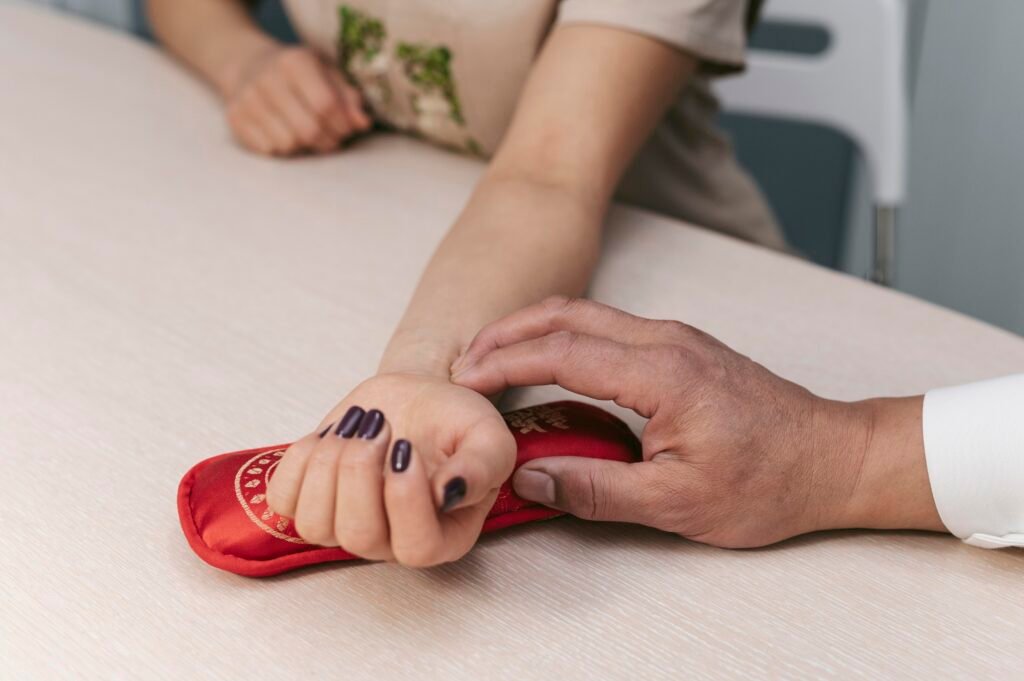
What a Nadi Pariksha Session Looks Like
A Nadi Pariksha session is usually calm, unhurried, and conversational. The assessment is not limited to checking the pulse alone; it forms part of a broader Ayurvedic evaluation.
Typical Setting and Flow
A session commonly includes:
- A brief discussion about your health concerns and history
- Questions about digestion, sleep, daily routine, stress, and recurring patterns
- A seated pulse assessment at the wrist
- Simple explanations of observed patterns in understandable language
What the Practitioner Focuses On
During pulse diagnosis in Ayurveda, the practitioner:
- Assesses subtle pulse qualities (not just pulse rate)
- Interprets findings in relation to constitution (Prakruti) and current imbalance (Vikruti)
- Correlates pulse observations with lifestyle and digestive patterns
What You Can Expect
From a patient’s perspective, Nadi Pariksha:
- Is non-invasive and painless
- Does not involve any instruments
- Is usually combined with general observation (such as tongue and facial cues)
- Results in personalised lifestyle or dietary guidance rather than a medical diagnosis
This helps set realistic expectations about what a nadi check is intended to provide.
Step-by-Step Process of Nadi Pariksha (How Pulse Diagnosis Is Performed)
Nadi Pariksha follows a structured clinical flow. While exact techniques can vary by practitioner and lineage, the process generally involves context-setting, pulse assessment, and interpretation within the individual’s lifestyle and constitution. This step-by-step outline explains how pulse diagnosis in Ayurveda is typically performed in practice.
Step 1: Pre-Assessment Context (Understanding the Person)
Before the pulse is assessed, the practitioner gathers basic context to avoid interpreting pulse findings in isolation. This may include:
- Current concerns and symptom patterns
- Digestion, appetite, bowel habits
- Sleep quality and daily routine
- Stress levels and mental workload
- Any ongoing medical care (to ensure responsible, complementary use)
This context helps the practitioner relate pulse qualities to Prakruti (constitution) and Vikruti (current imbalance) rather than making generic interpretations.
Step 2: Positioning & Pulse Points at the Wrist
Pulse diagnosis in Ayurveda is performed at specific points on the wrist. The practitioner gently places fingers on these pulse points in a relaxed, seated position.
The posture of the patient and practitioner, the position of the arm, and a calm environment are important to avoid distorted readings.
Step 3: Reading Pulse Qualities (Not Just Pulse Rate)
Unlike checking pulse rate alone, Nadi Pariksha involves sensing multiple pulse qualities, such as:
- Rhythm and regularity
- Strength and volume
- Depth and subtle texture
- Variations that may reflect Dosha tendencies
These qualities are interpreted holistically rather than as isolated markers.
Step 4: Interpreting Dosha Tendencies
The practitioner relates pulse qualities to Vata, Pitta, and Kapha patterns, considering:
- Your natural tendencies (Prakruti)
- Signs of current imbalance (Vikruti)
- How digestion and routine may be influencing these patterns
This interpretation is skill-based and requires clinical training and experience.
Step 5: Correlating With Other Observations
Nadi Pariksha is not used on its own. Pulse findings are correlated with:
- Lifestyle and dietary patterns
- Digestive strength (Agni)
- Observational cues such as tongue and facial signs
- The individual’s lived experience of symptoms
This integrated approach reduces the risk of oversimplified conclusions and supports more meaningful, personalised guidance.

If you’re considering a structured, practitioner-led Nadi Pariksha, understanding the process beforehand can help you approach the assessment with clarity. Book a Guided Nadi Pariksha at Ayurvishwa Healthcare
What Nadi Pariksha Does (and Does Not) Measure
Nadi Pariksha is designed to offer pattern-based insights into how the body is functioning, rather than to provide medical diagnoses. Understanding what pulse diagnosis in Ayurveda can and cannot measure helps set realistic expectations and builds trust.
What Nadi Pariksha Helps Assess
When interpreted by trained practitioners, Nadi Pariksha can help:
- Indicate Dosha tendencies (Vata, Pitta, Kapha patterns)
- Reflect digestive and metabolic patterns (Agni)
- Highlight differences between natural constitution (Prakruti) and current imbalance (Vikruti)
- Provide context for personalised lifestyle and dietary guidance
These insights are used to support individualised recommendations rather than to label diseases.
What Nadi Pariksha Does Not Measure
It’s important to be clear about the limits of pulse diagnosis in Ayurveda. Nadi Pariksha:
- Does not diagnose specific medical conditions
- Does not replace laboratory tests or imaging
- Should not be used for acute symptoms or emergencies
- Does not provide precise clinical measurements (such as blood values)
Pulse diagnosis is best used as a complementary assessment that works alongside modern medical evaluation where appropriate.
Accuracy & Reliability: What Influences a Nadi Pariksha Reading
The usefulness of pulse diagnosis in Ayurveda depends on multiple factors.
Key Factors That Influence Readings
Practitioner Training & Experience
Nadi Pariksha is a skill-based assessment. Interpretation improves with clinical experience and structured training in Ayurvedic diagnostics.
Context & Correlation
Pulse findings are most meaningful when correlated with digestion, routine, sleep, and other observational cues. Isolated readings are more prone to misinterpretation.
Time of Day & Physiological State
Pulse qualities can vary depending on:
- Time of day
- Recent meals
- Physical exertion
- Stress or emotional state
This is why practitioners often recommend assessments when the body is relatively settled.
Environment & Patient State
A calm setting and relaxed patient posture help reduce variability and support more consistent readings.
Pulse diagnosis in Ayurveda is observational in nature. Its reliability improves when used as part of a structured, holistic assessment rather than as a standalone test.
Best Time & Preparation for Nadi Pariksha
Because pulse qualities can vary with routine and physiological state, timing and preparation can influence how clearly patterns are observed.
Best Time for a Nadi Check
Traditionally, Nadi Pariksha is considered most informative when:
- The body is relatively settled and rested
- It is done earlier in the day, ideally before heavy meals
- You are neither overly hungry nor very full
- You are not immediately after intense physical activity or emotional stress
Morning hours are commonly preferred in traditional practice, though practical considerations may vary by clinical setting.
Simple Preparation Guidelines
To help ensure clearer readings:
- Avoid heavy meals, alcohol, or stimulants just before assessment
- Try to arrive calm and unhurried
- Wear comfortable clothing that allows easy access to the wrist
- Be ready to share basic information about sleep, digestion, and routine
These are general guidelines. Your practitioner may offer specific instructions based on individual context.
In-Person vs Online Nadi Pariksha: What’s Possible
With telehealth becoming more common, people often ask whether Nadi Pariksha can be done online. Understanding what is and isn’t possible helps set appropriate expectations.
What Requires In-Person Assessment
Authentic Nadi Pariksha requires:
- Direct pulse assessment by touch
- Observation of subtle pulse qualities that cannot be captured remotely
- Correlation with in-person observational cues
For this reason, a true nadi check cannot be accurately performed through video calls or self-measurement alone.
What Can Be Done Online
Online consultations can still support:
- Discussion of symptoms and health history
- Review of lifestyle, diet, sleep, and routine
- Education about Ayurvedic concepts and next steps
- Preparation for an in-person Nadi Pariksha
Remote consultations can complement in-person assessment but do not replace hands-on pulse diagnosis.
If you’re planning a Nadi Pariksha, choosing the right timing and an in-person setting helps ensure a more meaningful assessment. Schedule an In-Person Nadi Pariksha at Ayurvishwa Healthcare
Why Choose Ayurvishwa Healthcare for Nadi Pariksha
Ayurvishwa Healthcare follows a diagnosis-first, practitioner-led approach to Nadi Pariksha, rooted in classical Ayurvedic assessment and adapted to modern clinical contexts. The emphasis is on understanding the individual before offering any lifestyle or dietary guidance.
What Defines the Ayurvishwa Healthcare Approach
- Clinical guidance by experienced practitioners
Nadi Pariksha at Ayurvishwa Healthcare is conducted under the guidance of Dr. Vishwas Ghatge, an experienced Ayurvedic physician with over 20 years of clinical practice in traditional diagnostic methods and personalised Ayurvedic assessment. - Structured, step-by-step assessment process
Pulse diagnosis is integrated with Prakruti Parikshan, digestion and routine assessment, and observational cues such as tongue and facial signs, ensuring the process is not reduced to a standalone reading. - Medical-adjacent, responsible positioning
Ayurvishwa Healthcare positions Nadi Pariksha as a complementary assessment that works alongside modern medical care. It does not replace medical tests, diagnosis, or emergency treatment. - Personalised guidance aligned to the individual
Any guidance offered is based on the person’s constitution and current imbalance patterns, rather than generic protocols.
If you’re looking for a structured, practitioner-led Nadi Pariksha guided by experienced Ayurvedic clinicians, the setting and expertise matter. Book Your Nadi Pariksha at Ayurvishwa Healthcare
FAQs: How Nadi Pariksha Works
How does Nadi Pariksha work in Ayurveda?
Nadi Pariksha works through structured pulse assessment at specific wrist points, where trained practitioners interpret pulse qualities in the context of body constitution (Prakruti), current imbalance (Vikruti), digestion (Agni), and lifestyle patterns.
What happens during a Nadi Pariksha session?
A Nadi Pariksha session typically includes brief health history, lifestyle discussion, pulse assessment at the wrist, and correlation with digestion and routine patterns. It is non-invasive and forms part of a holistic Ayurvedic assessment.
How long does a Nadi Pariksha take?
The pulse assessment itself may take a few minutes, but a complete Nadi Pariksha session often includes discussion and interpretation, making the overall session longer depending on individual context.
Can I eat or drink before Nadi Pariksha?
It is generally recommended to avoid heavy meals, alcohol, or intense exercise just before Nadi Pariksha, as these can influence pulse qualities. Light hydration is usually fine unless advised otherwise by the practitioner.
Is Nadi Pariksha painful or invasive?
No. Nadi Pariksha is non-invasive and painless. The practitioner gently assesses the pulse at the wrist without any instruments.
Can Nadi Pariksha be repeated?
Yes. Nadi Pariksha may be repeated over time to observe changes in patterns alongside lifestyle adjustments. It is commonly used as part of ongoing, complementary Ayurvedic assessment.